
Why “Pacific Asia” changes the swing vs day trading equation
Swing trading versus day trading is usually explained in generic terms, without caring where the trader lives. In Pacific Asia the map matters a lot more than people admit.
If you sit in Tokyo, Singapore, Hong Kong, Sydney or Auckland your “local day” overlaps with the Asian and Pacific sessions, then runs into the European open in your late afternoon or evening. The US cash session lands late at night or after midnight for many. Forex and crypto are open around the clock, but actual liquidity still follows those big regional clocks.
That timing shapes what intraday opportunities you see during normal waking hours, which markets you can treat as “local”, and how much sleep you sacrifice if you insist on trading New York like someone in New Jersey.
In this piece swing trading and day trading are compared specifically from the point of view of a trader based in Pacific Asia. The idea is not to crown one perfect style, but to spell out how the region’s session structure, regulation, and practical life rhythms tilt the scales.
What swing trading and day trading actually mean in practice
Before getting cute about time zones, the basic definitions matter.
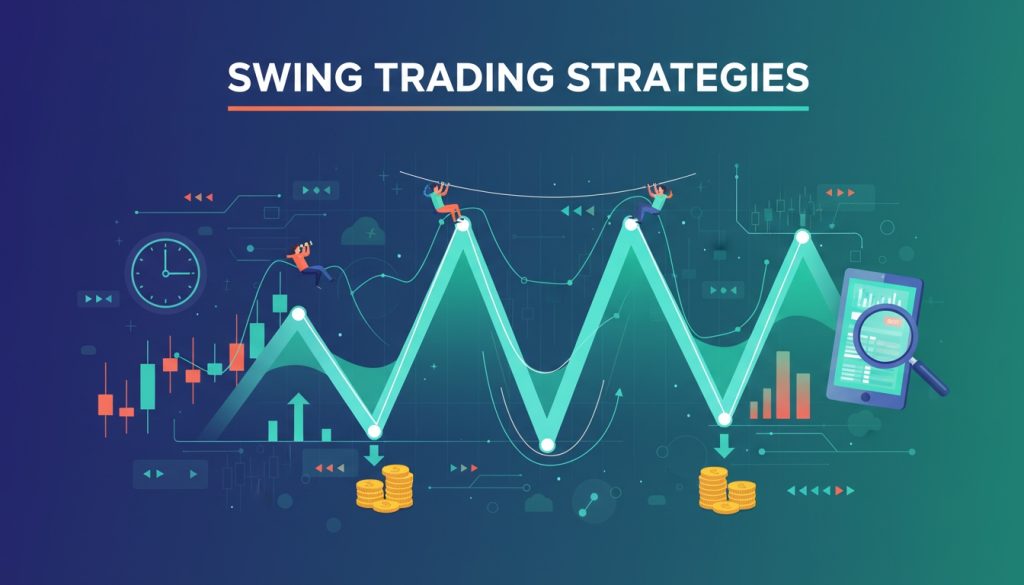
Day trading means you open and close positions in the same trading day. You do not hold risk overnight in that product. A pure day trader finishes flat in that instrument by the end of the session you trade. Swing trading means holding positions overnight and usually for several days or even weeks, trying to capture a chunk of a move rather than every tick in a single session. You can learn more about exactly what swing trading is and how it works by visiting SwingTrading.com.
On a chart the difference is mostly in the time frame you treat as “noise”. A day trader might stare at one-minute to fifteen-minute bars and care a lot about the opening auction and closing rotation. A swing trader cares more about four-hour, daily and even weekly structure, using intraday charts as timing tools rather than as the main battlefield.
Risk behaves differently too. A day trader carries little or no gap risk in that instrument, because positions are flat by the close. The danger is intraday volatility, slippage and the temptation to overtrade. A swing trader accepts gap risk in exchange for not having to sit at the screen all day. The danger is holding through news you underestimated, or letting a position drift while you convince yourself it will “come back”.
In Pacific Asia both styles sit on top of the same regional markets, but they interact very differently with the way those markets open, close and hand off to Europe and the US.
Market hours in Pacific Asia and how they shape both styles
Equity markets in Asia and Oceania tend to open in the morning, break around midday in several countries, and close by mid-afternoon local time. Tokyo, Hong Kong, Shanghai and Singapore all follow some version of a morning session, a lunch break, and an afternoon session that finishes around three or four. Australia’s main exchange opens at ten and closes at four without a lunch halt.
The forex market runs twenty four hours from Monday to Friday, but liquidity concentrates in four named sessions: Sydney, Tokyo, London and New York. From Pacific Asia you naturally live inside the Sydney and Tokyo windows, with London starting in your late afternoon and New York in your night. Sydney and Tokyo provide decent liquidity for yen, Australian and New Zealand dollar pairs, and some cross rates, but the very busy overlap between London and New York happens while most local traders are at dinner or in bed.
Crypto trades non-stop, but real volume and volatility still pulse around the same economic cycles, with bursts around US macro releases and funding rate resets.
For a day trader focused on local stocks, indices or regional currency pairs, this structure is manageable. Your active hours match the local cash session. If you try to day trade the US index futures or US single names from Pacific Asia, your “work day” runs deep into the night.
Swing traders do not care as much about exact session boundaries. They may enter during the Asian afternoon, let the position run through London, then watch how it reacts to New York data. That flexibility is an advantage in this region, where the next leg in a move often comes from London or New York while Asia is closed or quiet.
Day trading from Pacific Asia: benefits, frictions and lifestyle realities
Day trading from Pacific Asia can work very well if you aim at the markets that actually move when you are awake. Local equity index futures, major single names in Tokyo, Hong Kong, Singapore or Sydney, and regional FX pairs give you real intraday ranges as corporate and macro news hits in your daytime.
You benefit from knowing the local calendar. You are awake for regional central bank decisions, earnings from domestic heavyweights, and local policy headlines. When the Bank of Japan surprises, or the Reserve Bank of Australia shifts tone, the first wave of price reaction often happens in your natural work hours.
However there are frictions. Lunch breaks in cash equities cut the day into chunks and can kill momentum. Liquidity in some smaller Pacific Asia markets can be thin, with wide spreads and order books that do not suit high-frequency intraday tactics. If you want to trade big, that matters more than any textbook pattern.
Another practical issue is that international platforms often route Asia-based clients through entities that emphasise CFDs and index products rather than true underlying shares. That can be fine for intraday work, but you need to understand margin, contract specs and funding.
If you insist on day trading European or US markets from Pacific Asia, life gets more awkward. The European cash open lands mid or late afternoon for many in the region. The US regular session often starts around ten at night or later. Some traders choose to flip their sleep schedule and treat New York hours as their “day”. Others pick one or two key windows, such as the first ninety minutes of the US session, then sleep immediately after. Either way, it is a lifestyle choice as much as a trading choice.
For many, the constant screen time day trading demands is harder to combine with family life or a normal job when the main volatility window lands near midnight. That is often the quiet truth behind “I switched from day trading US to something else”.
Swing trading from Pacific Asia: carrying risk across sessions
Swing trading from Pacific Asia takes the same time zone reality and turns it into an advantage instead of a fight.
If you hold FX positions across days, you can enter during the Asian morning as Tokyo wakes up, then let the position play through the London open. You will be awake for at least part of both sessions, and you can check in again briefly during the US day without babysitting every minute. That fits comfortably with a normal work schedule for many in the region.
Equity swing trades on local markets also adapt well. You can scan and plan after the close, place orders for the next open, and monitor risk around the main news windows. Gaps on earnings or macro releases are part of the game, but you are not glued to the screen, and you can size positions to make that gap risk tolerable.
Swing trading US or European markets from Pacific Asia is more awkward but still doable. You will likely do most of your analysis on end-of-day data and accept that key events hit while you sleep. Stops and position sizing do the heavy lifting. Some traders choose to review US positions early in the Asian morning before their own region opens, then avoid heavy tinkering intraday.
The pay-off is a way of trading that respects your body clock. You accept overnight and weekend gaps in exchange for not running a night shift every weekday. In Pacific Asia that trade tends to suit more people than pure day trading on faraway sessions.
The risk is psychological as much as technical. Holding overnight into foreign macro data or central bank meetings is uncomfortable. Swing trading only works if you can sit through that without constantly logging in at three in the morning to move stops by a few ticks.
Capital, regulation and access when you sit in Tokyo, Singapore, Sydney or Hong Kong
There is another layer in the choice between swing and day trading in Pacific Asia: how brokers and regulators treat short term trading and leverage.
The US pattern day trader rule, which forces small accounts to hold at least twenty five thousand dollars of equity if they day trade frequently, is often quoted online. That rule applies to US regulated brokers and US margin accounts, not automatically to a trader in Japan or Malaysia trading local shares.
Local rules vary. Some Asia-Pacific equity markets limit intraday short selling or apply special uptick rules. Others have daily price limits that cap how far a stock can move in one session. That affects day traders more than swing traders, because it directly shapes how much range you can hunt in a single day. Margin rules on stock day trading credit also differ across Japan, Hong Kong, Singapore and Australia.
In FX, regulators in several parts of Pacific Asia have pushed back against very high leverage for retail traders, setting caps on maximum gearing. That hits both swing and day traders, but day traders who rely on heavy intraday size feel it more. At the same time, offshore brokers still offer high gear to clients in the region, which adds another layer of risk if used without care.
Access to instruments matters as well. A trader in Singapore can, through one decent multi-asset broker, trade Singapore, Hong Kong, US and European shares, plus futures and FX. Someone in a smaller Pacific island market might rely on international CFD brokers for most access. Swing trading is easier when your platform offers fair overnight financing and reliable corporate action handling. Day trading is easier when you have stable data, low latency and good routing into local markets.
Capital size tilts the decision. If you have a modest account, the costs of high frequency day trading in relatively wide Asia-Pacific cash markets can eat you alive. Swing trading, where commission and spread are paid less often, tends to be more forgiving for smaller accounts in this region.
Matching style to personality, schedule and markets you trade
Once you blend style definitions, market hours and practical constraints, the choice between swing trading and day trading in Pacific Asia becomes less theoretical and more personal.
If you live in Tokyo, love intraday action, and are happy to focus on Nikkei futures and yen pairs, day trading can be viable. Your active window aligns with the local open and the early European handover. You can log off by early evening and behave like a normal person. Trying to day trade US small caps from Tokyo, on the other hand, means choosing a semi-nocturnal life.
Someone in Singapore with a day job might choose to swing trade local and US equities. That trader could do analysis after work, place orders for the next day, and use alerts rather than constant monitoring. FX swing trades around yen, Singapore dollar, Australian and New Zealand dollar pairs also fit that rhythm.
A Sydney-based trader sits in a slightly different spot. The overlap between Sydney and Tokyo sessions gives a decent early day FX window. London opens in the late afternoon, which suits people who can be in front of screens into the evening. The US open is still late, but less brutal than from parts of East Asia. That makes a hybrid approach more realistic: active trading during Asia and part of Europe, swing positions in US indices.
Personality matters more than most want to admit. If you are impatient, hate holding overnight, and are comfortable reacting fast under pressure, day trading on local markets might suit. If you prefer to think slowly, hold a thesis for days, and dislike staring at a ladder, swing trading is safer for your nerves.
In Pacific Asia the extra question is whether your style forces you to fight your own time zone. Every time you feel yourself tempted to chase the New York open after a full local day, that question answers itself.
This article was last updated on: February 17, 2026